Klovićevi dvori Gallery, Jezuitski trg 4
 Tuesday - Sunday, 11:00 - 19:00
20. November 2026.
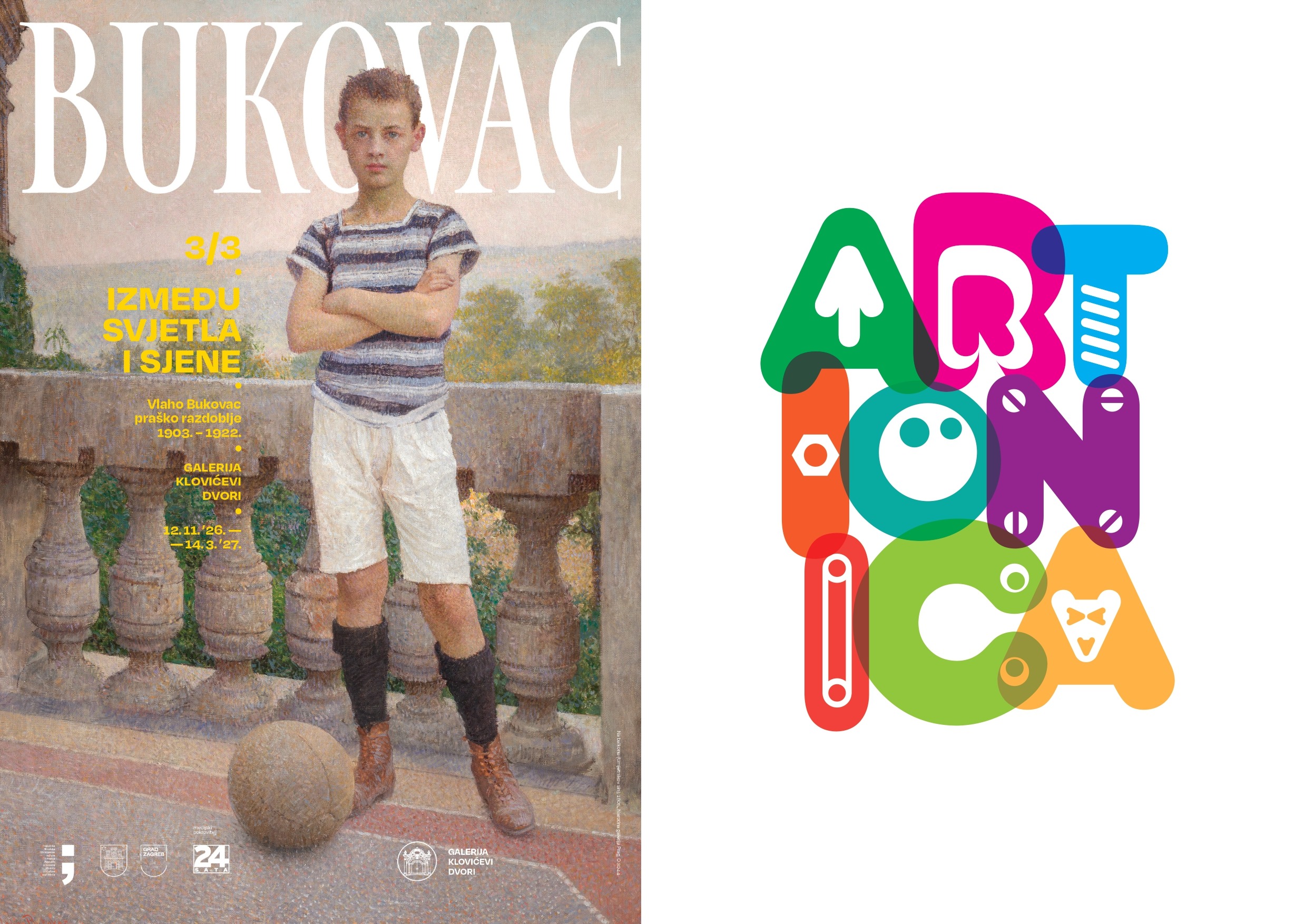
Vlaho Bukovac is one of Croatia’s most important painters and a key figure in the development of modern Croatian art. Following exhibitions presenting the Paris and Zagreb phases of Bukovac’s artistic career, we have now gradually arrived at Prague, where the artist settled in October 1903 to take up a teaching position at the Prague Academy of Fine Arts.
By that time, he had already established an international artistic career and earned a reputation as an accomplished painter and activist, as well as a driving force and promoter of modern Croatian art. He had also achieved fulfilment in his private life as a family man and father of four young children: his son Ago and daughters Jelica, Marija and Ivanka.
21 November 2026: 11 am – 12.30 pm
During his Prague period, Bukovac continued to develop a painting technique he had begun exploring in Vienna, one closely associated with Post-Impressionism. In Prague, he painted using small, multicoloured brushstrokes which, unlike in his earlier work, were no longer blended smooth but left clearly visible. The impasto is thin and transparent. The canvas surface was prepared with a layer of chalk, allowing light to pass through the layers of paint and reflect back. His colour palette became more limited, with more muted tones diluted with a little turpentine and less oil to achieve a matt finish. The colours he used most frequently were pale yellow, burnt sienna, ultramarine blue and caput mortuum.
Bukovac immortalised his three daughters, his son and his wife Jelica in numerous compositions. Through these portraits, we can follow the continuity of their lives, from childhood to adulthood, as well as the different stages of his wife Jelica’s life, from her youth to maturity.
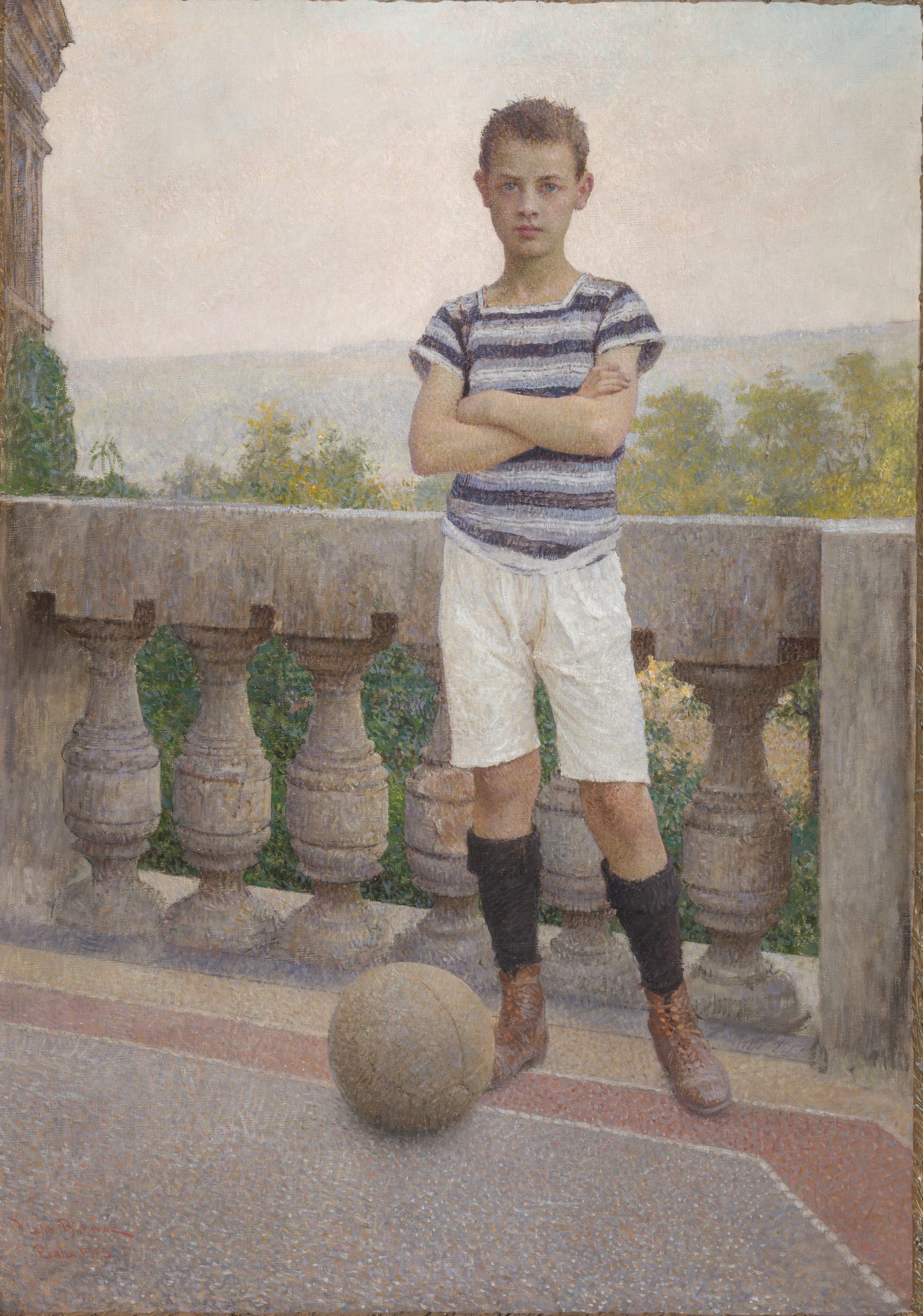
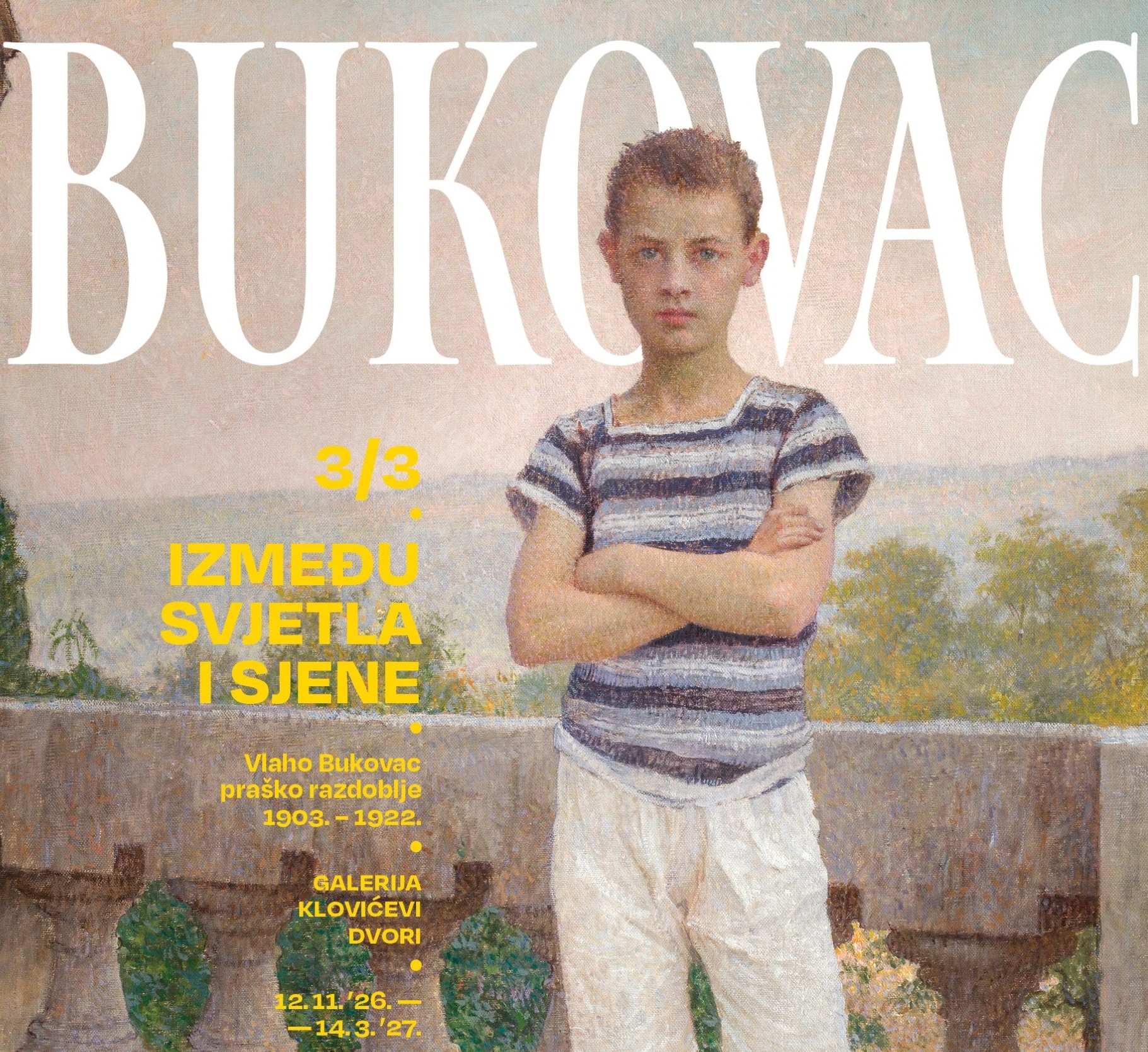
TASK: In the painting, we see his son Ago standing on a balcony, looking at us boldly and proudly, with his arms crossed and a ball at his feet. He is dressed in a sports kit. Our theme will be the familiar motto: A healthy mind in a healthy body!
You will paint yourselves as athletes, accompanied by an object associated with your chosen sport. If you play football or basketball, it will be a ball; if you play ice hockey or go ice skating, you will paint your skates; and if you ski, your skis.
We will treat the canvas in the same way Bukovac did in this painting. He gives the entire surface an exceptionally soft, Pointillist treatment, using tiny dabs of paint to achieve remarkable softness, connecting the figure with the softly and indistinctly rendered natural background. He would later retain this dotted brushwork exclusively for the depiction of flesh tones.
28 November 2026: 11 am – 12.30 pm
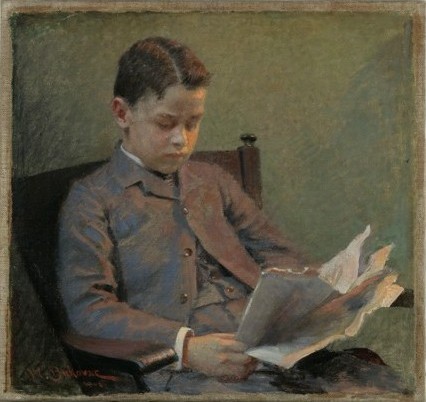
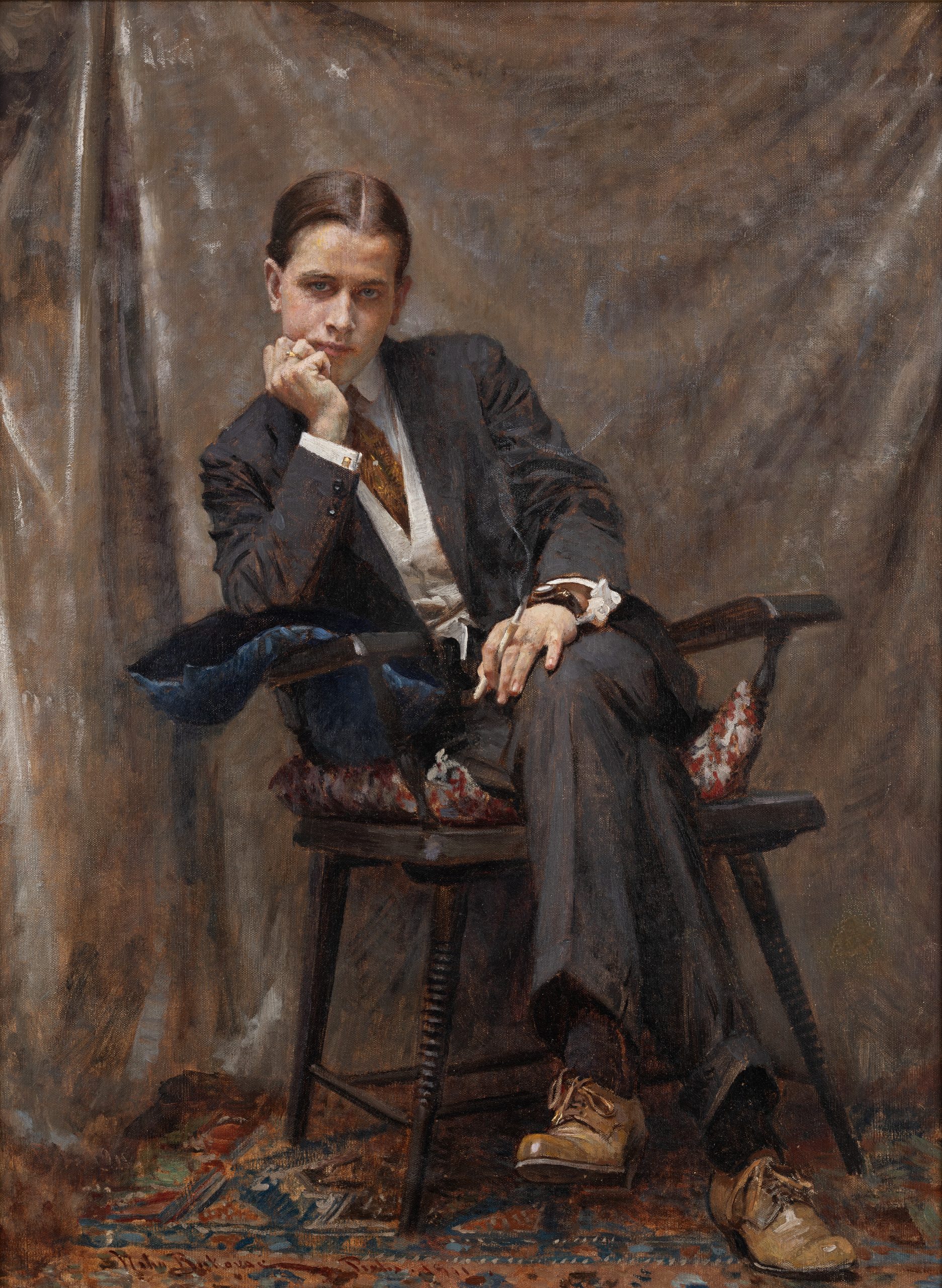
We saw in the exhibition that Bukovac painted his son Ago on several occasions. Two portraits, Ago with a Newspaper and Portrait of My Son Ago, were painted several years apart.
TASK: We should have two photographs taken a few years apart. Since many of you are around six or seven years old, please bring one photograph of yourselves as babies and another showing what you look like today.
Our task will be to create a double self-portrait: Me as a Baby and Me Today.
5 December 2026: 11 am – 12.30 pm
12 December 2026: 11 am – 12.30 pm
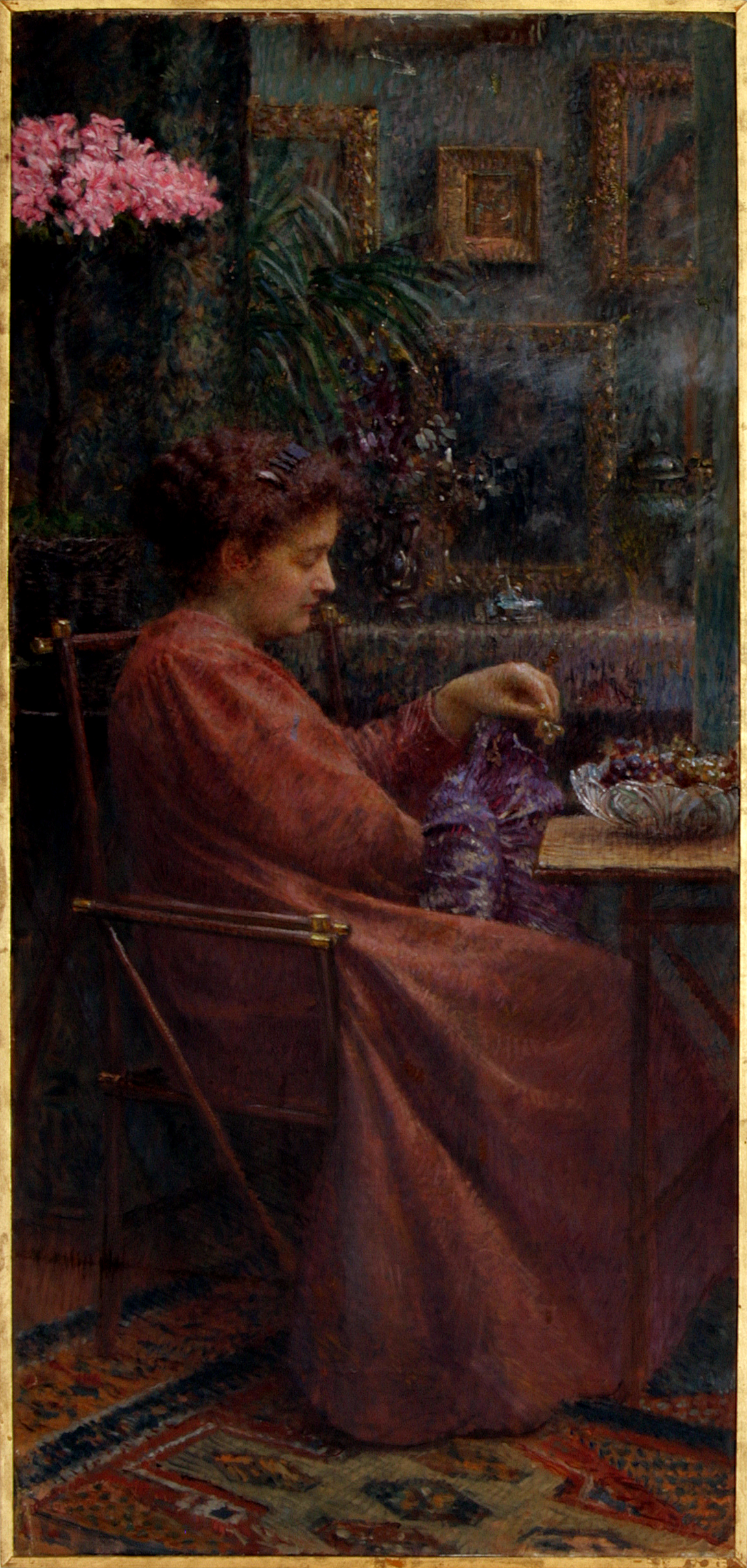
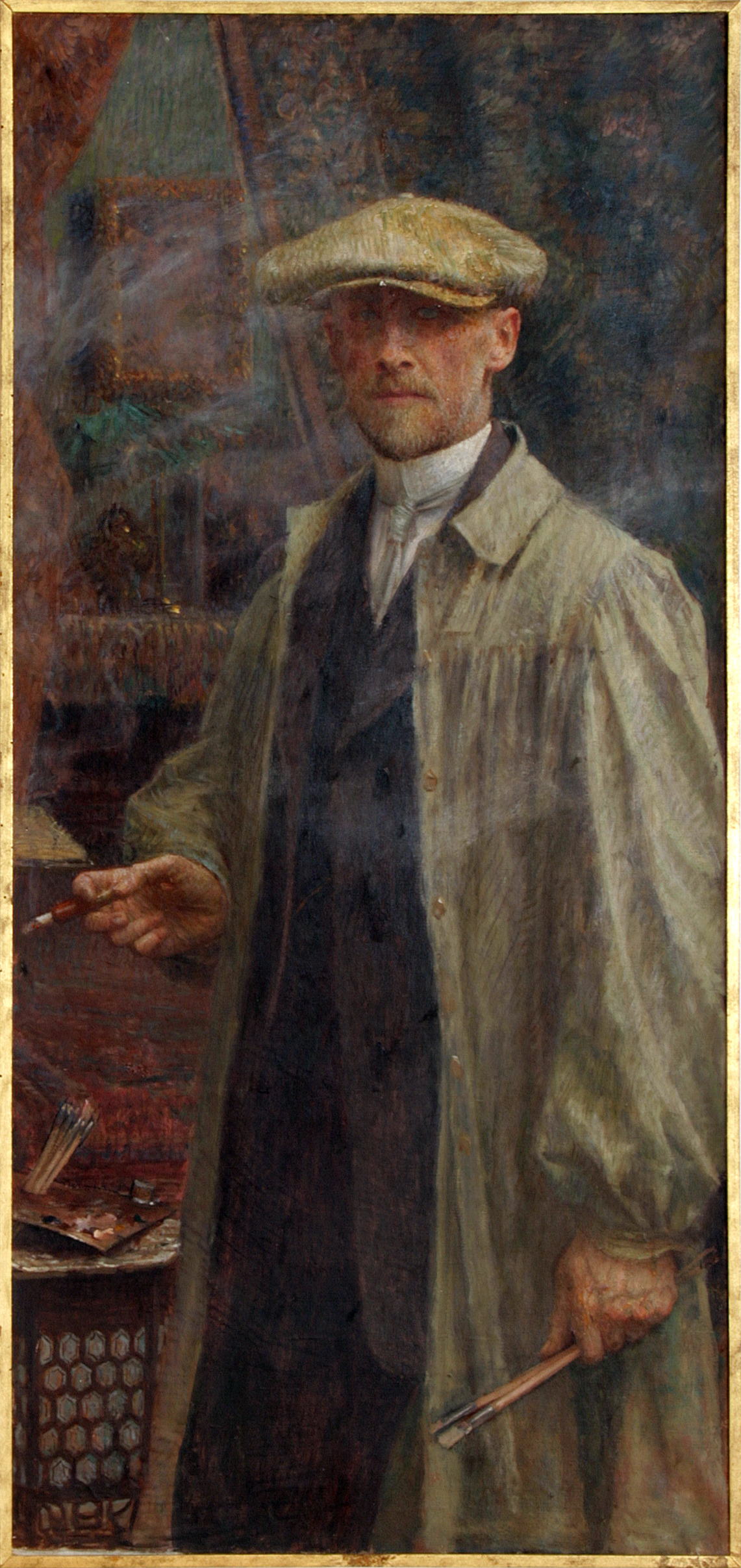
The diptych presented in the exhibition depicts the artist’s wife Jelica in one painting and a self-portrait of Bukovac in the other.
Bukovac painted several self-portraits in Prague, portraying himself as a mature artist, professor and gentleman, often with his palette and brushes. In his paintings of Jelica, Bukovac frequently wrote the affectionate words ‘mile mamice’ (dearest mother). Unlike his earlier preoccupation with her physical beauty, he now placed the emphasis on her steadfastness, warmth and compassion, as well as on her sharing both the joys and hardships of life with him.
TASK: During our visit to the exhibition, we will sketch Vlaho Bukovac’s self-portrait and then transfer it onto paper in the workshop. At the following workshop, we will do the same with the portrait of his wife Jelica.
–
–
–
–
–
–
–
–
19 December 2026: 11 am – 12.30 pm
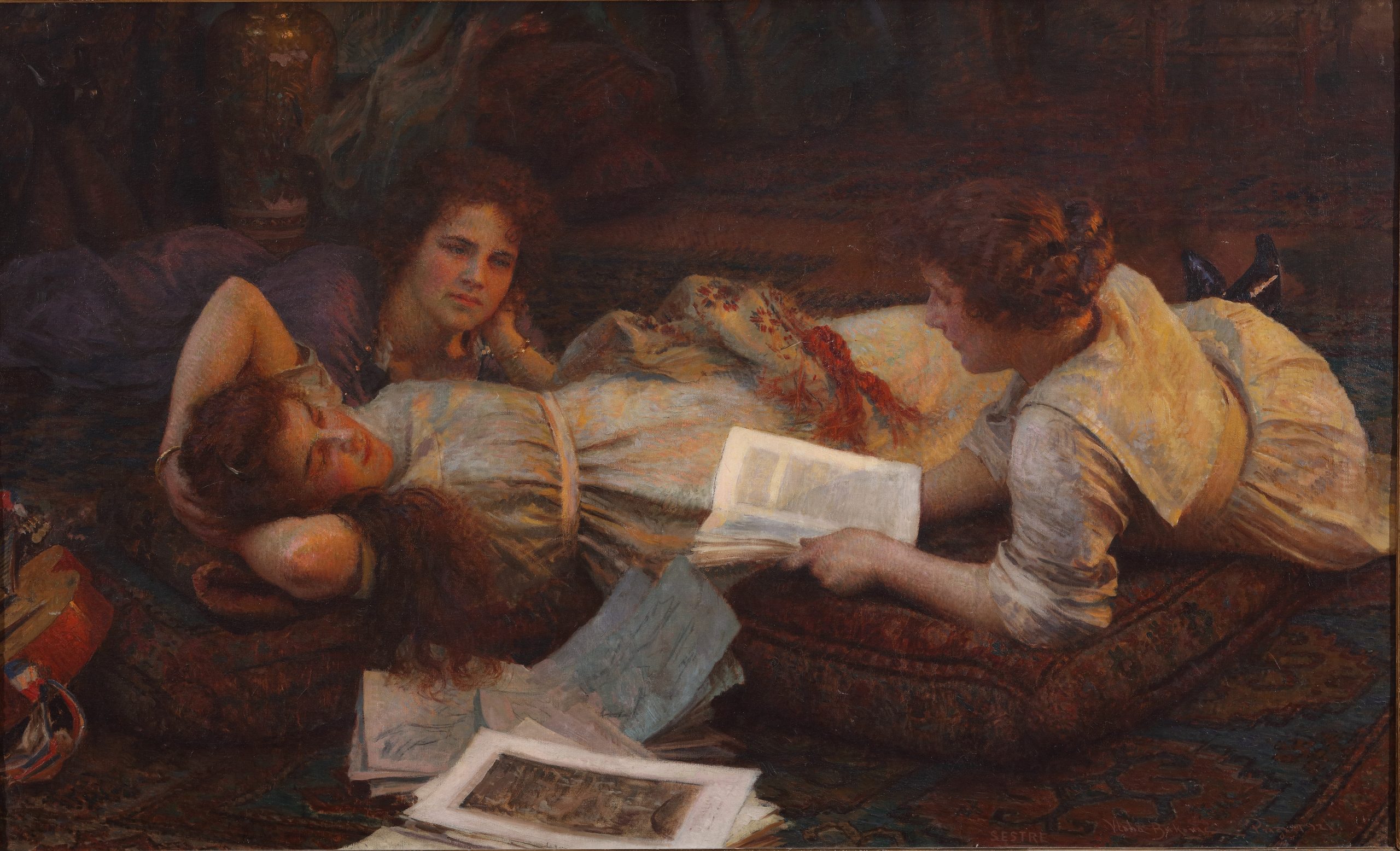
Bukovac’s numerous family portraits reveal how much he delighted in the beauty of his daughters, particularly their long, thick hair, which became one of the most visually striking elements of his compositions.
He often painted them together, working or relaxing, emphasising the warm atmosphere of family life. He depicted them leafing through books, playing musical instruments and enjoying games with their dolls.
In 1921, he painted a large composition entitled The Sisters, depicting three grown young women lying carefree on cushions, daydreaming about the future. Scattered around them are drawings on paper, a book and a guitar.
TASK: Some of you have brothers or sisters; perhaps you have a best friend whom you consider as close as a brother or sister. You will paint yourselves together with your siblings or friends, sharing a moment in which you talk or dream about the future, or perhaps discuss something interesting that has happened to you recently.
Workshops for nursery and school groups are organised on every weekday except Monday, by arrangement with teachers and educational staff.
Workshops for adults continue to take place every Wednesday from 6 pm to 8 pm.
– Liljana Velkovski Museum Education Adviser and Workshop Coordinator