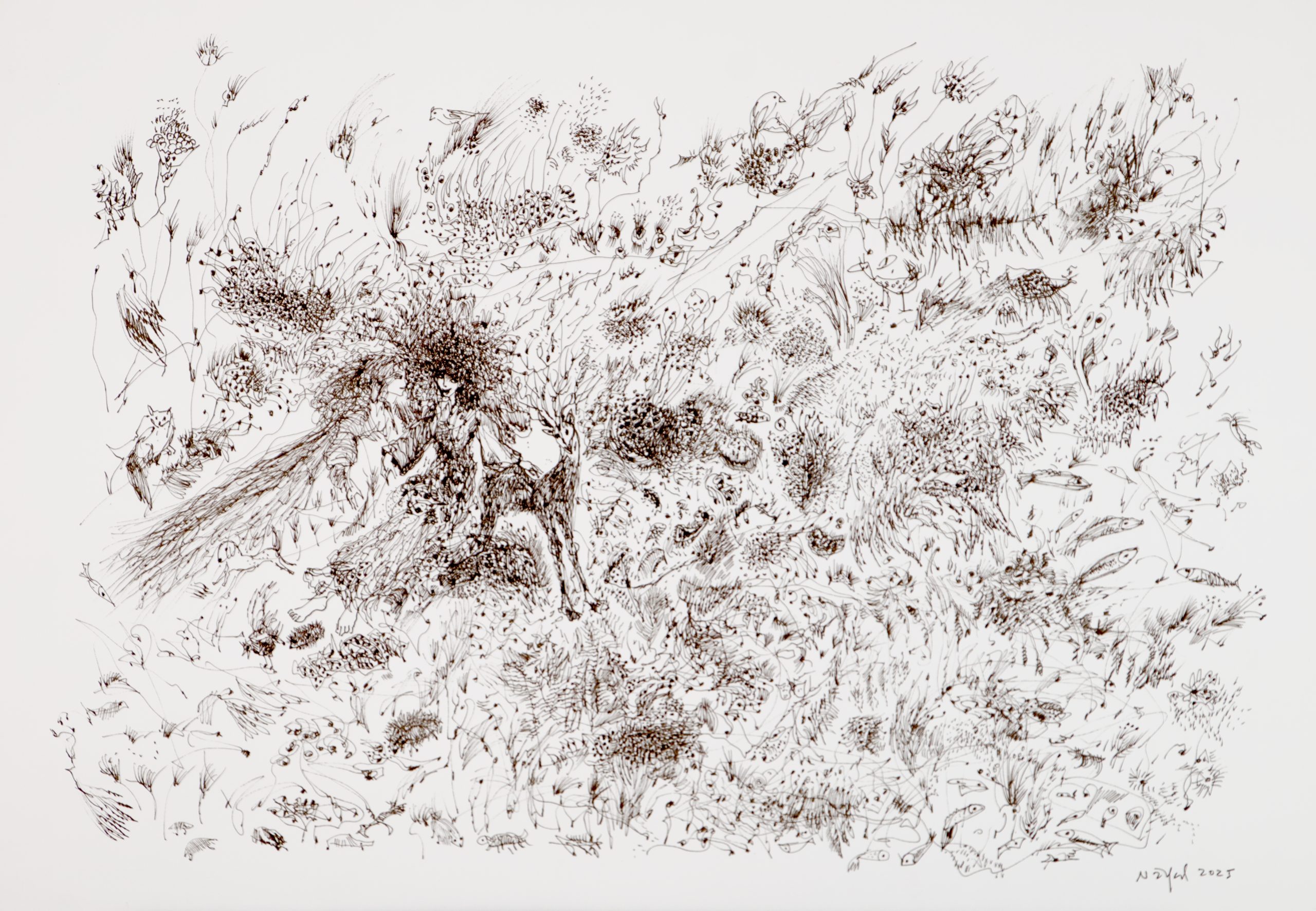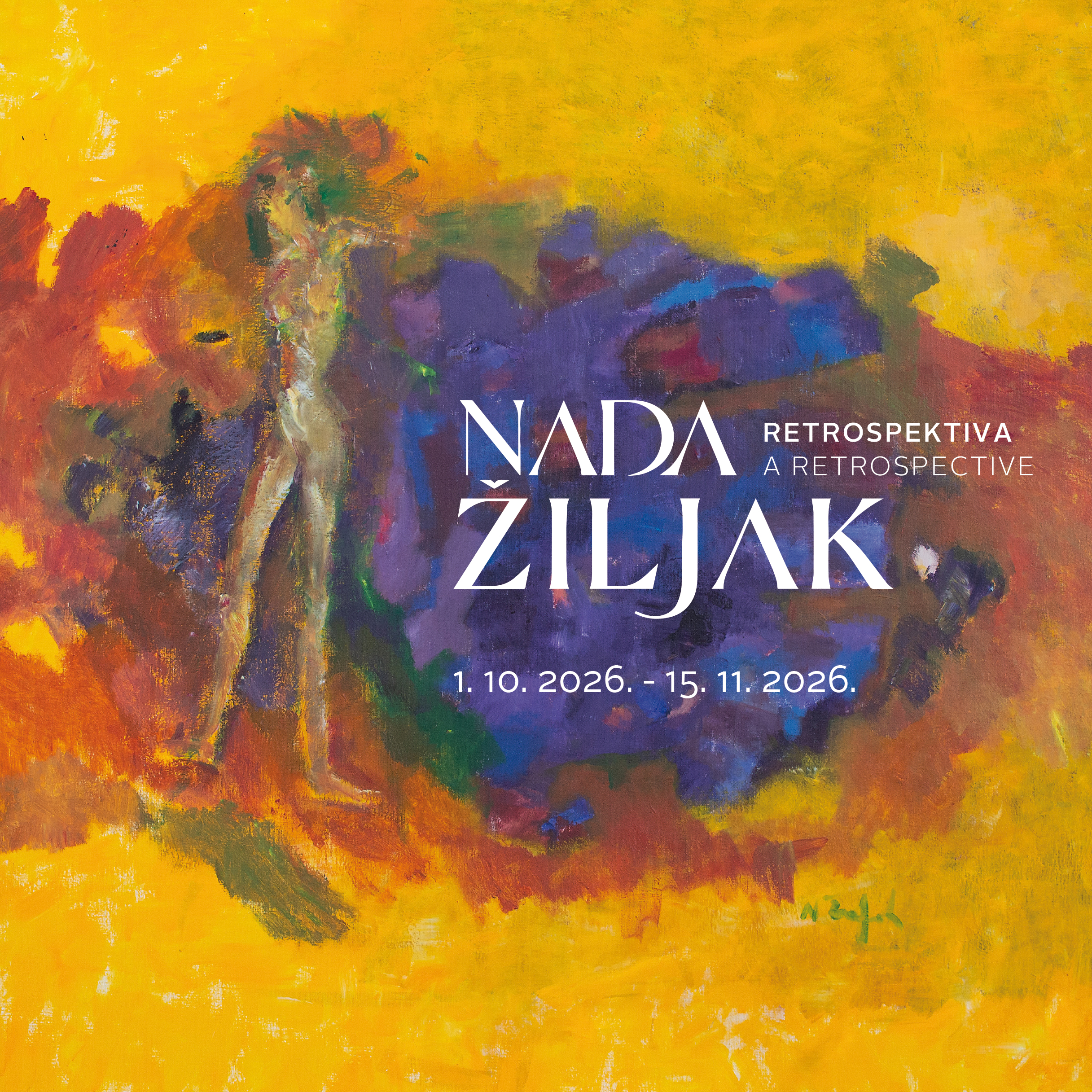
The Klovićevi Dvori Gallery continues its Modern Classics cycle, presenting retrospectives of prominent Croatian artists. Following exhibitions dedicated to Nives Kavurić Kurtović, Mersad Berber, Nevenka Arbanas, Vasko Lipovac, Josip Botteri Dini, Miro Vuco and others, the next in the series is Nada Žiljak, an artist whose creative journey, spanning nearly six decades, has been marked not only by a long and distinguished career, but also by a constant curiosity about the image, the medium and technique.
The retrospective, on view from 1 October to 15 November 2026, will be the first to present her artistic journey in its entirety in one place.
This is precisely what makes the Modern Classics cycle distinctive: rather than focusing on a single segment of an artist’s oeuvre or one particular period of their work, the Gallery offers audiences the opportunity to view the complete creative paths of artists whose work has helped shape Croatian art. Over the years, the cycle has brought together highly diverse artistic approaches, generations and poetics, united by what the title itself suggests: these are artists whose oeuvres have become an important part of Croatia’s artistic heritage.
Nada Žiljak, born in Zagreb in 1944 into the Kinert artistic family, naturally belongs within this context. Her father was the distinguished Croatian painter, printmaker and Academy of Fine Arts professor Albert Kinert, who was also one of her teachers. Nada Žiljak graduated from the Graphic Arts Department of the Academy of Fine Arts in 1967 and specialized in illustration in 1970.
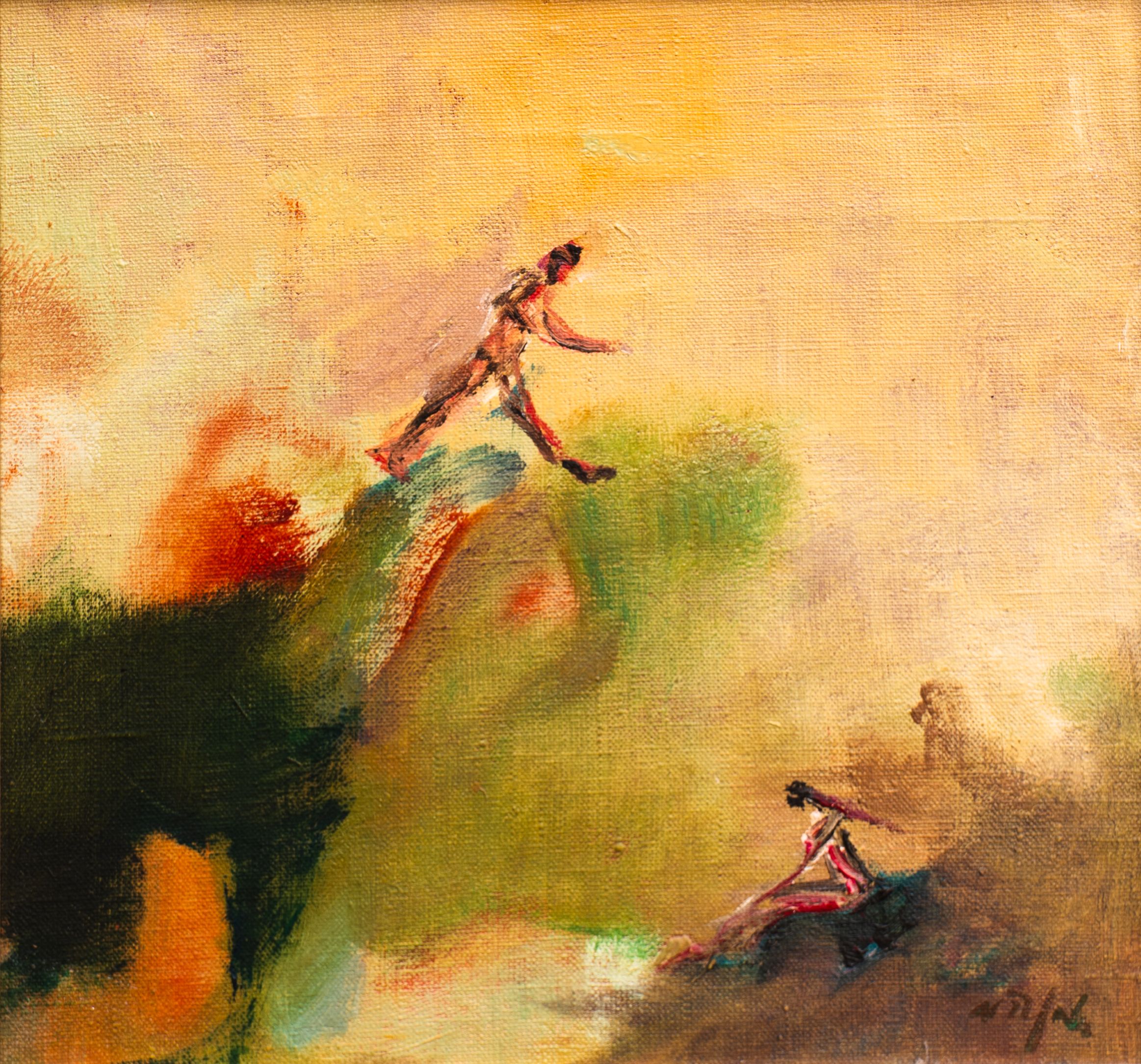
Her artistic career, however, was never confined to a single discipline or technique. Over nearly six decades of work, she has explored painting, printmaking and illustration, working in oil, acrylic, watercolor and pastel, as well as traditional printmaking techniques such as drypoint, etching and linocut. Throughout her career, she has been characterized by a pronounced curiosity and willingness to explore new possibilities within the image.
One of the most intriguing examples of this exploration is InfraredArt, which has been part of her work since 2009. It is a dual image, a work containing two independent visual manifestations, one visible to the human eye and the other revealed in the infrared spectrum. In Žiljak’s work, classical artistic practice thus meets experimentation and technology, while the image becomes something more than what can be seen at first glance.
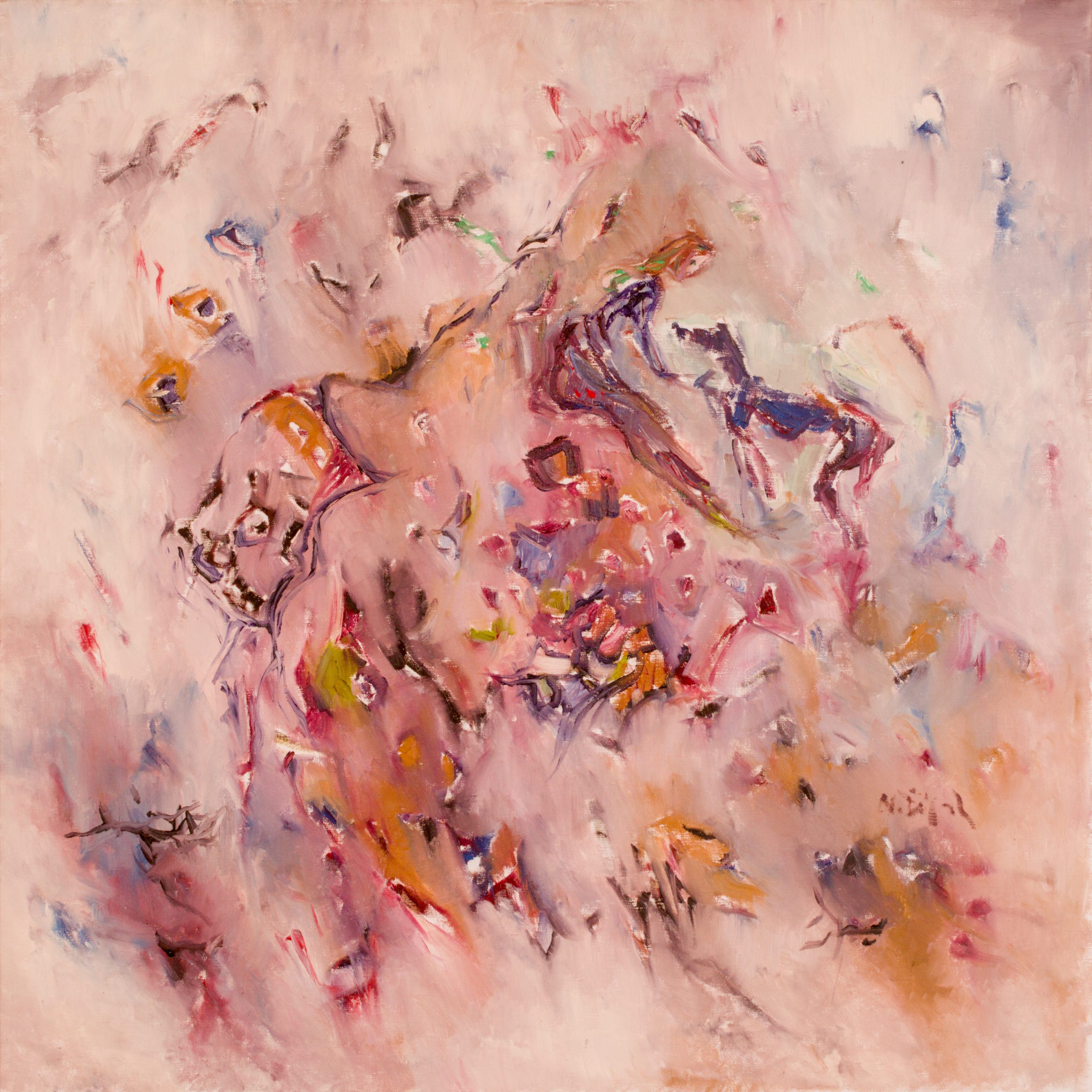
The content of her oeuvre is equally diverse. Her works feature the human figure and intimacy, nature and landscapes, animals, biblical motifs, as well as numerous scenes rooted in everyday life and her personal experience of the world. It is precisely this combination of diverse media and a highly personal artistic language that makes her oeuvre difficult to reduce to a single theme or style.
To date, Nada Žiljak has held around eighty solo exhibitions in Croatia and abroad, including in Budapest, Cairo, Graz, Kyiv, Pécs, Bratislava, Paris, London, Kuala Lumpur, Taipei, Sarajevo and Pittsburgh. Monographs on her work have also been published by Đuro Vanđura, Branka Hlevnjak and Dora Kinert Bučan.
Her connection to the Kinert family is more than an interesting biographical detail. Albert Kinert was one of the important figures in Croatian printmaking in the second half of the 20th century. In 1969, he established the postgraduate printmaking programme at the Academy of Fine Arts, and among his students were numerous artists who later became prominent figures in Croatian art. Nada Žiljak belongs to precisely that generation of artists who came of age under his pedagogical and artistic influence, while going on to develop a distinctive and autonomous artistic world of her own.
She still paints almost every day. In earlier presentations of her work, she summed up her relationship with artistic creation in a simple sentence: “I have to paint, because painting is who I am.”
This is why the retrospective at the Klovićevi Dvori Gallery is not simply a survey of a long artistic career. It is an opportunity to rediscover, in one place, the oeuvre of an artist who has remained devoted to painting for decades while never ceasing to explore it — from drawing, printmaking and illustration to images that reveal themselves only through an infrared camera.
–
Exhibition author and curator: Anamarija Komesarović
Co-author: Jagor Bučan
Exhibition layout: Anamarija Komesarović
GKD Programme Manager: Petra Vugrinec
Technical Organization: Dragutin Matas
Technical Production: Davor Markotić, Tomislav Antolić, Nino Bellen, Josip Butorac, Boris Krepelnik
Education Programme: Liljana Velkovski
Public Relations: Anamarija Alfirev
Visual Identity: Jana Žiljak Gršić